For a decade, the smart home has grown the way suburbs grow: every brand built its own road. Lights spoke one language, thermostats another, locks a third, and every manufacturer sold a bridge to translate. Owners paid the price — apps that multiplied, hubs that conflicted, and devices that became expensive paperweights when a company lost interest. Matter and Thread are the industry’s answer to that mess, and they are why Decoresmart has committed its product roadmap to the open standards path. Here is what that means, in practical terms.
Matter: One Common Language
Matter is an application-layer standard, meaning it defines how smart devices describe themselves and the commands they understand. A Matter lock exposes its lock and unlock states, its battery level, and its user codes the same way every other Matter lock does — regardless of who manufactured it. The standard is developed by the Connectivity Standards Alliance, whose founding board includes the companies behind the biggest voice and home platforms.
The practical consequence is called multi-admin: one lock, commissioned once, controllable from several ecosystems at once. Your household can keep using its preferred voice assistant while a property manager uses a professional platform, and neither forces the other out.
Thread: The Network Underneath
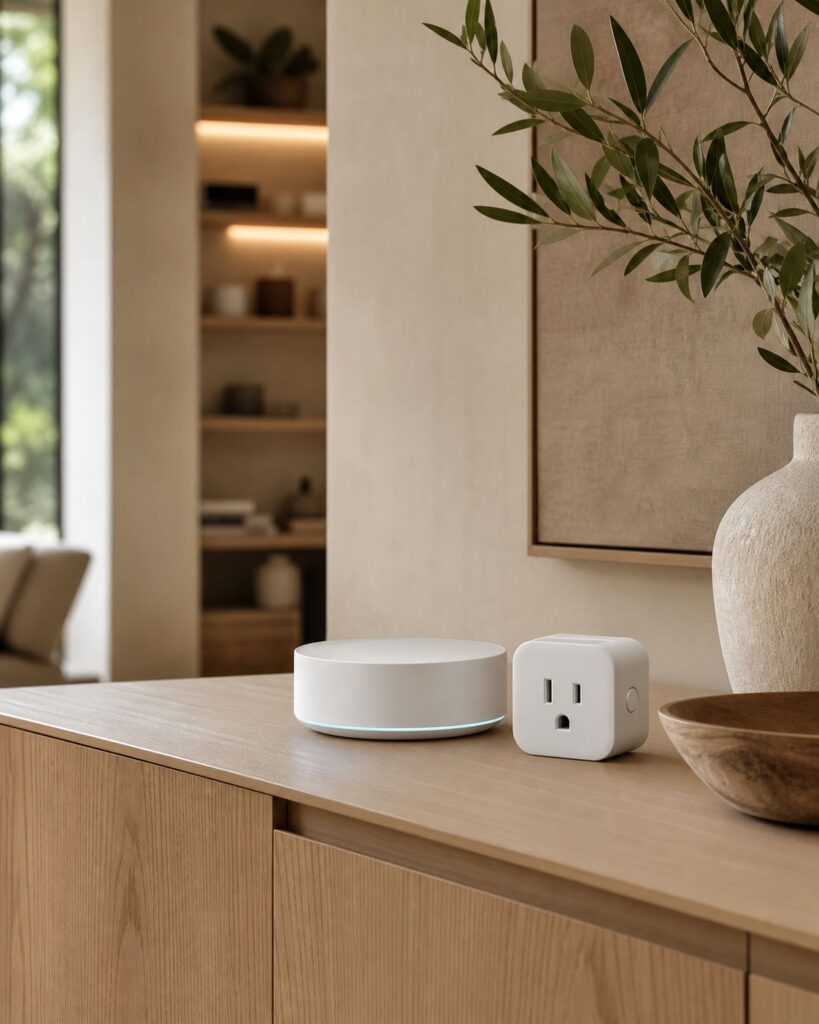
Thread is the low-power radio network Matter prefers for battery devices. Technically it is an IPv6 mesh: every Thread device relays for its neighbors, and mains-powered devices (a speaker, a smart plug) become router nodes that extend coverage automatically. There is no single point of failure; if one node drops offline, traffic finds another path.
For a door lock, Thread’s profile fits the job description unusually well:
- Low power draw — measured in microamps while idle, so battery locks stay battery locks.
- Fast response — no cloud round-trip; commands travel the local mesh in milliseconds.
- Self-healing — the network reroutes around a unplugged router node without manual re-pairing.
- Secure by construction — device identity and encryption are built into the protocol, not bolted on.
What Changes for a Household
Standards only matter when they shrink the list of things an owner has to think about. With a Matter-ready Decoresmart lock, that list gets shorter in concrete ways. One commissioning flow from your phone puts the lock into your chosen ecosystem. Routines written for your platform — “goodnight” scenes, geofenced unlocking, guest access schedules — simply include the door. When you switch phone brands or move to a new assistant, the lock comes along instead of being orphaned. And local control means the door keeps responding to app commands even if the internet is down.
What Changes for Properties and Integrators
For hotels, apartment operators, and integrators, the standards path changes the economics of projects. A mixed-vendor installation no longer needs a protocol zoo of bridges, and the tender question shifts from “which ecosystem locks us in?” to “which products do the job best?” Our Matter roadmap is designed around exactly that flexibility, which is why our management dashboard keeps working alongside platform apps rather than competing with them.
Our Rollout, Plainly Stated
Current Decoresmart connected locks, beginning with the DESF01 via firmware 2.4 and continuing across the DESF and DESO ranges, are gaining native Matter support over Thread through firmware updates — free, in place, without new hardware for models with Thread radios. Each release notes state plainly which models are covered, and no product will ever be marked “Matter-ready” by a promise of future firmware alone.
The Door as a Platform
The front door is where security, convenience, and identity meet, and it deserves infrastructure built in the open. Standards give locks a longer useful life, protect owners from ecosystem churn, and let us compete where it counts: hardware quality, recognition accuracy, reliability, and support. That is a trade we are glad to make. If standards planning shapes your next project, our engineering team welcomes the conversation through the contact page.
Three Questions We Get Asked Most
“Do I still need the DEC app?” Only if you want to. Matter support means the lock works within your chosen ecosystem on its own, and many owners will happily live there. The DEC app remains the deepest toolset — user management, access history, firmware updates, diagnostics — so households and properties that want those details keep both, side by side, without conflict.
“What happens if the internet goes down?” The door keeps working. Codes, cards, fingerprints, and face recognition are local functions that never depended on connectivity. Thread routines and app control over the local mesh also continue, because the network is in your home, not in a data center. Cloud features like remote notifications pause until your line returns.
“Will my lock become obsolete when Matter updates?” This is the question standards exist to answer. Matter versions are designed for backward compatibility, and our firmware updates carry those refinements to existing hardware rather than forcing replacements. A lock you buy this year is built to ride the standard forward — that is the entire point of choosing it.
Standards work is slow, unglamorous, and utterly worth it. Every hour our engineers spend in working groups is an hour your front door stays compatible with a future none of us can fully predict. That trade — patience now, longevity later — is the Decoresmart position, and we are happy to be judged on it in the years ahead.
Back to all perspectives