
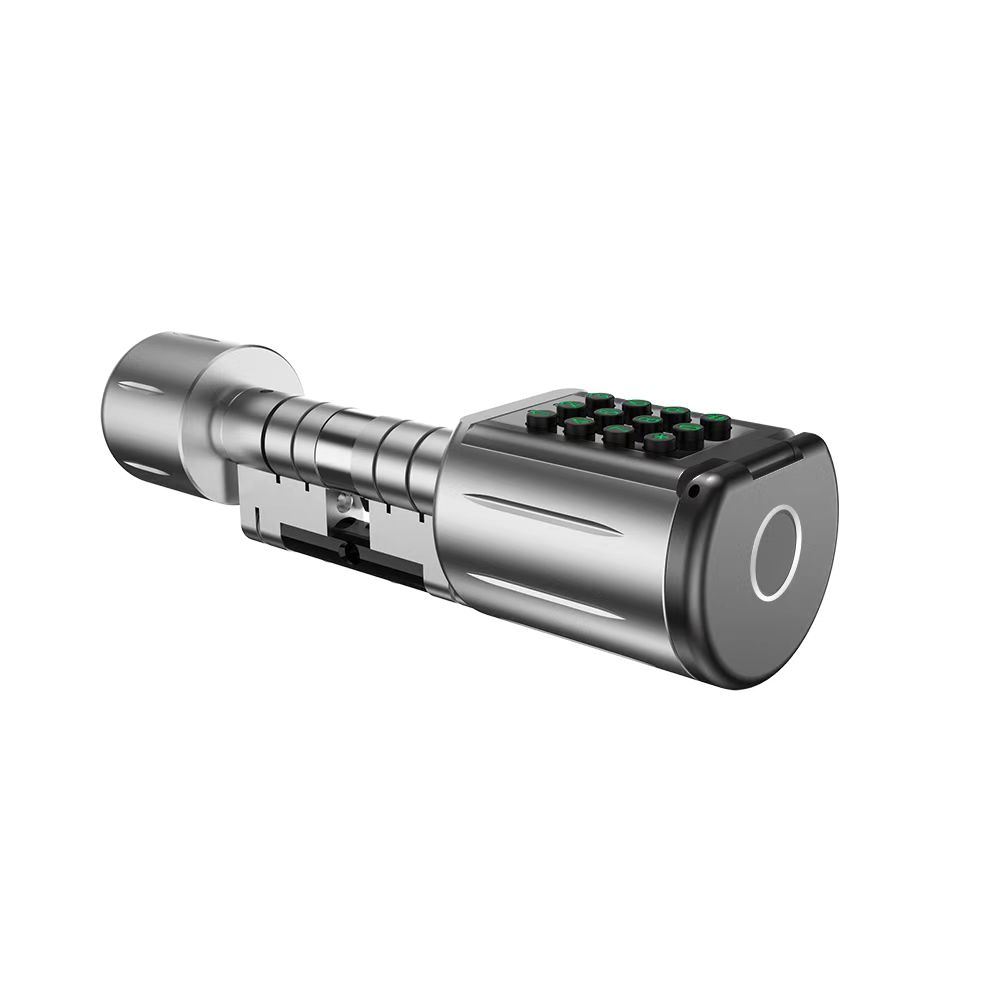
Outdoor locks live harder lives than any other device on a house. They take sun in summer, storms in autumn, and ice in winter, while being expected to work flawlessly every single time a gloved hand reaches for them. The DESO03 has served that job well since launch — and after two years of field data from coastal, tropical, and freeze-thaw climates, we have built everything we learned into Revision B, which begins shipping this week.
A Seal You Can Verify, Not Just Read
The headline change is the weather protection. Revision B carries a verified IP66 rating, up from IP65 on the original. In plain terms, that means the lock shrugs off directed water jets and heavy rain from any angle, not just splashes. The improvement came from a redesigned gasket path and new drainage channels behind the keypad panel, both of which you can see in the exploded diagram included with every unit.
Independent lab testing went beyond the rating itself. Locks cycled through salt-spray chambers, condensation tests, and UV exposure equivalent to years of direct sun, then were disassembled and inspected. The results are summarized in the updated technical datasheet available to partners on request.
Built for Real Temperature Ranges
The operating window now spans -30°C to 70°C, which sounds like spec-sheet bragging until you remember where our customers install: Scandinavian porches in February, Gulf stairwells in August. Cold performance got particular attention. Battery management in Revision B keeps lithium cells healthier at low temperatures, and the fingerprint sensor window includes a thin-film heater element that melts frost before a finger ever lands.
The Keypad, Upgraded
The most-requested hardware change was the keypad, and Revision B answers it properly:
- Backlit on both sides. Interior and exterior keypads glow softly on approach, using a light sensor so daytime visibility stays crisp.
- Anti-peep scrambled digits are now standard: enter your code surrounded by random dummy digits and the lock still reads it correctly.
- Wearing gloves? Key travel and spacing were tuned so winter gloves register reliably on the first press.
- Coated keys resist fading and fingerprints after tens of thousands of presses.
Same Footprint, Same Battery, Same App
Revision discipline matters to installers, so we held the line on everything else. The mounting footprint, hole pattern, door thickness range, and battery format are identical to the original DESO03. A retrofit takes minutes: unscrew, swap, re-enroll. The DEC app sees a Revision B as the same product, with a hardware revision note in the device info panel, and every existing accessory — including the cylinder kits and gate adapters — fits without change.
Availability and Upgrade Path
Revision B replaces the original DESO03 across all channels; stock of Revision A sells through as usual and keeps full warranty and firmware support. For property customers with mixed estates, both revisions can be managed side by side in the same dashboard, which means phased upgrades stay simple.
If you already own the original DESO03 and your climate is kind to it, there is no urgent reason to switch — but owners in harsh-weather regions can ask their installer about a trade-in option through the contact page. For new projects and tenders, Revision B is now the model we will quote by default.
What Stayed the Same on Purpose
Revision discipline is a feature, so this list matters as much as the changes:
- Mounting footprint and hole pattern — identical to Revision A; retrofit is unscrew, swap, re-enroll.
- Battery format — the same cells, the same tray, the same runtime expectations.
- DEC app experience — one product entry, with the hardware revision noted in device info.
- Accessories — cylinder kits, gate adapters, and strike plates interchange fully.
- Firmware line — both revisions receive updates together, not on separate schedules.
Property managers running mixed estates can therefore phase their upgrades season by season without managing two products.
Field Notes from Two Winters
The changes in Revision B were not invented in a conference room; they came from field returns and partner logs. Frost-covered fingerprint readers in northern China taught us the heater window. Salt-laden coastal air in Southeast Asia exposed a gasket seam we have since redesigned. A ski-lodge operator reported that guests in gloves were double-pressing keys, which produced the new key-travel tuning. Every fix in this revision traces to a real door, somewhere, that taught us something. That feedback loop — installer reports to factory floor to next revision — is the quiet advantage of being a manufacturer that services what it sells.
Where to See Revision B in Person
Datasheets describe; hands-on convinces. Revision B units begin appearing immediately across our demonstration network: partner showrooms receive upgrade kits over the coming weeks, and the display doors at trade appearances switch over from this month onward. Anyone evaluating a multi-unit project can also request an on-site demonstration — our project team brings a fitted door section, a spray rig, and a thermal chamber to your table so the weather claims can be tested in front of your own facilities team.
Sample orders for qualified installers, distributors, and specifiers open now, with priority allocation for partners holding active demonstration doors. Each sample ships with the full test summary pack: salt-spray durations, condensation cycles, torque figures, and drop-test results — the same documents we hand to laboratories, because evaluation materials should not be softer than the truth.
If your region’s climate has a failure story about outdoor locks, tell us that story when you write. Revision B exists because of those stories, and the next revision will need the new ones.
Back to all perspectives